

At Seekribbon, we believe that high-quality satin ribbons are not just about aesthetics—they must also be safe for consumers and fully compliant with global environmental regulations.
To prove our commitment to quality and transparency, we recently submitted a batch of our Grey Satin Ribbon (SGS Sample ID: NGB22-0029916-0001.C001) to SGS, the world’s leading inspection, verification, testing, and certification company.
Today, we are pulling back the curtain to share our first-hand experience and the real data from our latest EU RoHS Directive (EU) 2015/863 compliance test.
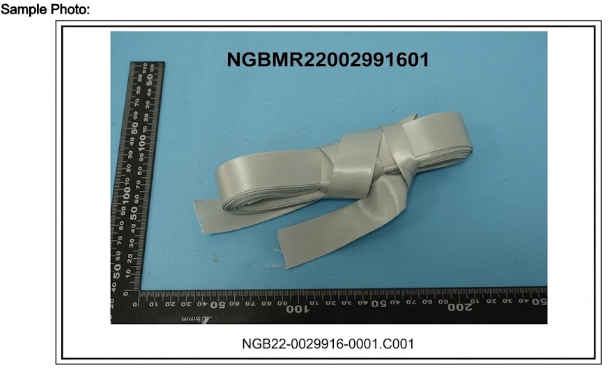
1. The Sample & Visual Verification
As shown in our testing preparation, the sample submitted was a roll of grey fabric. The SGS report authenticates this with a physical photo of the ribbon alongside a measurement scale, logged under Sample No. 1 and SN ID: SN1.
When dealing with textile manufacturing, batch consistency is critical. By documenting the exact sample used in the report, our B2B clients can confidently trace their orders back to the exact quality control standard.
2. The Testing Scope: What Were We Looking For?
The European Union’s RoHS (Restriction of Hazardous Substances) directive is one of the strictest in the world. For our satin ribbons to enter the EU market, they must be tested for 10 restricted substances:
- Heavy Metals: Lead (Pb), Mercury (Hg), Cadmium (Cd), Hexavalent Chromium (Cr(VI)).
- Flame Retardants: Polybrominated biphenyls (PBBs) and Polybrominated diphenyl ethers (PBDEs).
- Phthalates: DEHP, BBP, DBP, and DIBP (often used as plasticizers in coatings or inks).
3. Our First-Hand Testing Methodology
To ensure absolute accuracy, SGS employed rigorous, standardized testing methodologies. Here is exactly how our satin ribbon was analyzed:
- Elemental Analysis (Heavy Metals): The ribbon underwent acid digestion using microwave/hotplate, followed by filtration. To ensure no elements were trapped in the residue, an alkali fusion/dry ashing step was performed. The solution was then analyzed using ICP-OES (Inductively Coupled Plasma Optical Emission Spectrometry).
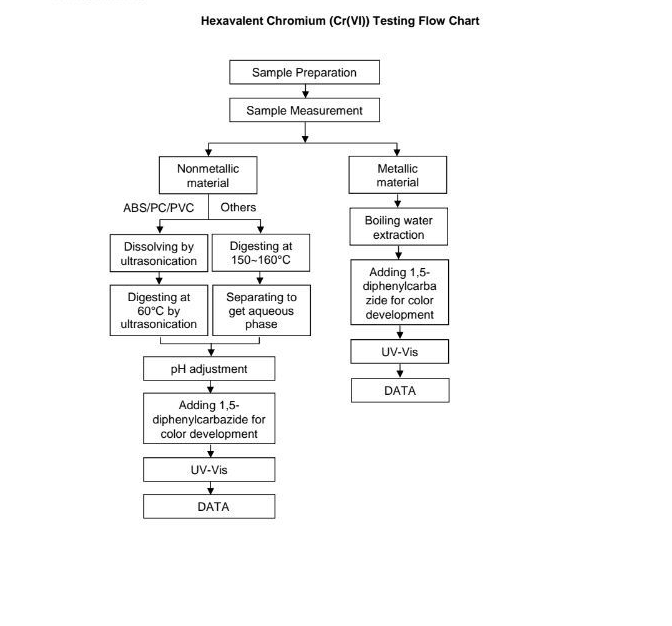
- Hexavalent Chromium (Cr(VI)): Because our satin ribbon is classified as a non-metallic material, it underwent a specific process: dissolving via ultrasonication (or digesting at 150-160°C), separating the aqueous phase, adjusting the pH, and adding 1,5-diphenylcarbazide for color development. The result was measured using UV-Vis Spectrophotometry.
- PBBs, PBDEs, and Phthalates: These organic compounds were extracted using solvent extraction, concentrated/diluted, and filtered. The analysis was performed using GC-MS (Gas Chromatography-Mass Spectrometry).
4. The Real Data: Decoding the Results
We believe in full transparency. Let’s look at the actual numbers from the SGS report.
Understanding the Terms: The Method Detection Limit (MDL) is the smallest amount of a substance that can be reliably detected. Not Detected (ND) means the substance was either completely absent or fell below the MDL, which is the ideal result for compliance.
Heavy Metals Test Results
| Test Item(s) | Limit | Units | MDL | Result |
|---|---|---|---|---|
| Cadmium (Cd) | 100 | mg/kg | 2 | ND |
| Lead (Pb) | 1000 | mg/kg | 2 | ND |
| Mercury (Hg) | 1000 | mg/kg | 2 | ND |
| Hexavalent Chromium (Cr(VI)) | 1000 | mg/kg | 8 | ND |
Flame Retardants (PBBs & PBDEs)
| Test Item(s) | Limit | Units | MDL | Result |
|---|---|---|---|---|
| Polybromobiphenyl (PBBs) | 1000 | mg/kg | – | ND |
| Polybromodiphenyl ether (PBDEs) | 1000 | mg/kg | – | ND |
Phthalates (Plasticizers)
| Test Item(s) | Limit | Units | MDL | Result |
|---|---|---|---|---|
| Dibutyl Phthalate (DBP) | 1000 | mg/kg | 50 | ND |
| Benzyl Butyl Phthalate (BBP) | 1000 | mg/kg | 50 | ND |
| Bis-(2-ethylhexyl) Phthalate (DEHP) | 1000 | mg/kg | 50 | ND |
| Diisobutyl Phthalate (DIBP) | 1000 | mg/kg | 50 | ND |
The Verdict: As clearly indicated by the ND (Not Detected) results, every single tested item in our grey satin ribbon passed the strict EU RoHS limits comfortably. Our ribbons are 100% safe, eco-friendly, and ready for your global supply chain.
5. What This Means for Our Partners
As a manufacturer, running these tests is an investment. But for our global clients—especially those in fashion, gift packaging, and child-safe products—this SGS report provides peace of mind.
When you source from Seekribbon, you are not just buying beautiful satin ribbons; you are buying a supply chain that prioritizes environmental safety, regulatory compliance, and uncompromised quality.