

Different Types of Ribbon: A Complete Guide to Materials, Weaves, Finishes & Uses
Table of Contents
- How Are Ribbons Classified?
- Ribbon Types by Material
- Ribbon Types by Weave & Construction
- Ribbon Types by Surface & Finish
- Ribbon Types by Edge & Structure
- Ribbon Types by Pattern
- Ribbon Types by Application
- Ribbon Types Comparison Chart
- How to Choose the Right Ribbon
- What to Include in a Ribbon RFQ
- Why Ribbon Names Can Be Confusing
- Frequently Asked Questions
- Final Thoughts
Ribbon is often treated as a simple decorative material, but there are many different types of ribbon – and they can differ significantly in material, weave, texture, structure, finish and intended use.
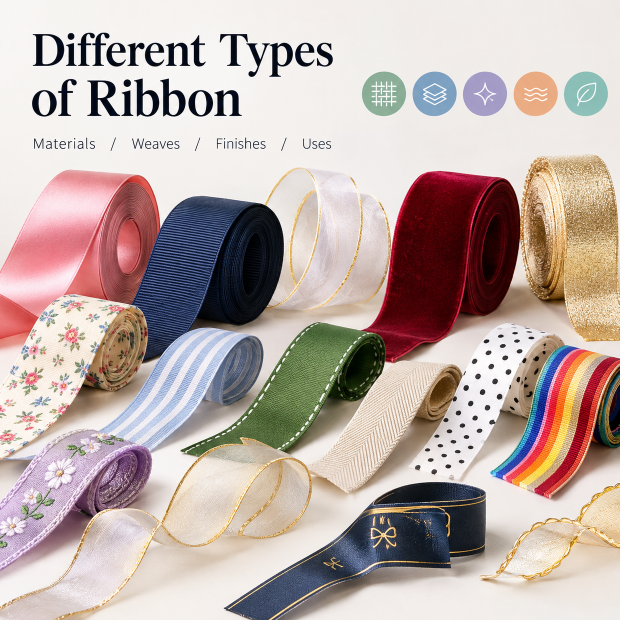
A satin ribbon, for example, describes a particular smooth and glossy appearance and construction. Silk describes the fiber used to make the ribbon. Wired ribbon describes its structure, while printed ribbon describes how a design is applied. This means one ribbon can belong to several categories at the same time.
For businesses sourcing ribbon for packaging, branding, apparel, hair accessories, floral products or other commercial applications, understanding these differences is far more useful than simply memorizing a list of ribbon names.
This guide explains the major types of ribbon by material, weave, construction, surface, edge, pattern and application, and provides practical information to help buyers choose the right ribbon for their projects.
How Are Different Types of Ribbon Classified?
There is no single system for classifying every ribbon. Instead, ribbon can be categorized according to several characteristics:
- Material or fiber – what the ribbon is made from
- Weave or construction – how the ribbon is manufactured
- Surface and finish – how the ribbon looks and feels
- Edge and structure – how the edges or internal structure are made
- Pattern or decoration – what appears on the ribbon surface
- Application – what the ribbon is designed or commonly used for
These categories overlap. For example, a product could be described as:
100% polyester double-faced satin ribbon with a custom printed logo
This single product carries several characteristics at once:
- Polyester = material
- Satin = construction
- Double-faced = surface construction
- Printed logo = decoration
- Packaging = application
Understanding this distinction is important when sourcing ribbon, because the name alone may not provide enough information for a manufacturer to quote or produce the correct product.
Different Types of Ribbon by Material
The material or fiber is one of the first specifications to consider when choosing ribbon.
Silk Ribbon
Silk ribbon is made from natural silk fibers and is known for its soft hand feel, elegant appearance and natural luster. Compared with many synthetic ribbons, silk can provide a more refined and luxurious appearance. It is commonly associated with premium gift packaging, fashion accessories, weddings, invitations and high-end branding.
Silk ribbon can be produced in different constructions and finishes, so “silk ribbon” does not necessarily describe the weave by itself. For buyers, important specifications may include silk composition, ribbon width, weight or thickness, color, edge finish, single-sided or double-sided construction, and roll length.
Polyester Ribbon
Polyester is one of the most widely used fibers for commercial ribbon. It can be manufactured into many different constructions, including satin, grosgrain, organza and velvet. Polyester ribbon is popular for large-volume applications because it can offer consistent color, durability and a wide range of available widths and finishes.
Common applications include gift packaging, brand packaging, hair bows, floral products, events and decoration, and promotional products.
Cotton Ribbon
Cotton ribbon is made from natural cotton fibers and typically provides a softer, more natural textile appearance. It can be used for apparel, sewing, craft products, rustic packaging, handmade products, and natural or eco-oriented branding. Cotton ribbon may also be printed, dyed or finished in different ways depending on the application.
Nylon Ribbon
Nylon ribbon is a synthetic ribbon option known for strength and flexibility. Depending on its construction, nylon ribbon can be used for apparel, accessories, packaging, straps, labels and other applications where durability is important.
Acetate Ribbon
Acetate ribbon has a distinctive glossy appearance and crisp hand. It is particularly associated with floral arrangements, decorative bows and applications where a structured, polished appearance is required. Acetate ribbon is also often recognized by its clean cut edge. For a more detailed explanation, see What Is Acetate Ribbon?
Rayon and Viscose Ribbon
Rayon and viscose ribbons can provide a soft hand feel and an attractive textile appearance. They are used in decorative packaging, fashion, apparel and other applications where appearance and softness are important.
Recycled and Eco-Friendly Ribbon
Recycled polyester and other lower-impact ribbon materials are increasingly relevant for brands looking to reduce the environmental impact of their packaging. When sourcing an eco-friendly ribbon, buyers should confirm the actual material composition, recycled content and any relevant certifications rather than relying only on general sustainability claims.
Different Types of Ribbon by Weave and Construction
The way fibers are woven or constructed gives a ribbon many of its visual and physical characteristics.
Satin Ribbon
Satin ribbon is recognized by its smooth surface and relatively high sheen. It is widely used for premium gift packaging, cosmetics packaging, wedding decoration, hair bows, branding and promotional products.
Satin ribbon may be single-faced or double-faced. Double-faced satin has a finished appearance on both sides, making it particularly useful for bows and applications where the ribbon may twist or turn.
Grosgrain Ribbon
Grosgrain ribbon has a distinctive ribbed surface created by its construction. It generally provides more structure than many smooth ribbons and is widely used for hair bows, packaging, branding, apparel, accessories and decorative applications. The width, rib structure, thickness and fiber composition can all affect how a grosgrain ribbon performs. See our detailed guide to What Is Grosgrain Ribbon?
Organza Ribbon
Organza ribbon is lightweight, sheer and generally crisp. Its transparency makes it particularly suitable for weddings, floral arrangements, gift packaging, decorative bows, events and seasonal decoration. Organza can be produced in different widths, colors and finishes, including wired versions.
Taffeta Ribbon
Taffeta ribbon has a relatively crisp and structured feel with a smooth surface. It can be used for decorative bows, packaging, apparel and event decoration where a more structured ribbon is desirable. The exact appearance and hand feel depend on the material, weave density and finishing process.
Petersham Ribbon
Petersham ribbon has a ribbed appearance but is distinguished by its characteristic flexible edge. It has traditionally been associated with millinery and apparel, although it can also be used for accessories, crafts and decorative applications. Because Petersham and grosgrain can look similar, buyers should pay attention to the edge construction rather than relying only on the surface texture. Learn more in What Is Petersham Ribbon?
Twill Ribbon and Twill Tape
Twill construction produces a recognizable diagonal pattern in the textile. Twill tape is commonly used in apparel, sewing, garment construction, labels, binding and craft applications. The terms “twill tape” and “twill ribbon” can be used differently in different markets, so buyers should confirm the required width, material, thickness and edge finish. See What Is Twill Tape? for a more detailed explanation.
Jacquard Ribbon
Jacquard ribbon uses a weaving process that allows patterns, logos or other designs to be incorporated into the woven structure. Unlike a surface-printed design, the pattern is created through the weaving process itself.
Jacquard ribbon can be used for brand logos, premium packaging, fashion accessories, decorative applications and custom textile products. For branded products, jacquard and printed ribbon should be compared based on artwork, material, quantity, appearance and production requirements.
Different Types of Ribbon by Surface and Finish
Two ribbons made from similar fibers can look completely different because of their surface finish.
Velvet Ribbon
Velvet ribbon has a raised, plush surface that gives it a soft and luxurious appearance. It is commonly used for luxury packaging, fashion accessories, jewelry packaging, holiday decoration, premium gift wrapping and decorative bows. The final appearance can vary depending on the pile, density, fiber, width and finishing process.
Metallic Ribbon
Metallic ribbon incorporates metallic fibers, metallic yarns or a metallic surface effect to create a reflective appearance. It is commonly used for Christmas packaging, weddings, events, gift wrapping, holiday decoration and premium promotional packaging. Gold and silver are common choices, but metallic effects can be produced in many other colors.
Printed Ribbon
Printed ribbon has a design applied to its surface. Depending on the material, artwork and production requirements, different printing methods may be used. Printed ribbon is commonly selected for company logos, brand names, repeating patterns, promotional messages, event names and seasonal designs. For commercial orders, buyers should provide artwork specifications and clearly state the required ribbon material, width and background color.
Foil-Stamped Ribbon
Foil stamping creates a metallic or decorative graphic effect on the ribbon surface. Gold and silver are common choices, but other foil effects may also be available. Foil stamping can be particularly useful for premium packaging where the brand wants a strong visual contrast.
Embroidered Ribbon
Embroidered ribbon incorporates thread-based decorative elements into the ribbon. It can be used for specialty packaging, fashion accessories, craft products and decorative applications where a more dimensional appearance is desired. The choice between embroidery, printing and jacquard weaving depends on the artwork, desired appearance and production requirements.
Different Types of Ribbon by Edge and Structure
The edge and structure of a ribbon can be just as important as its surface appearance.
Wired Ribbon
Wired ribbon contains flexible wire, commonly along one or both edges. The wire allows the ribbon to be shaped and helps it maintain a bow or decorative form. Wired ribbon is widely used for large bows, gift wrapping, floral arrangements, Christmas decoration, seasonal displays and event decoration.
Cut-Edge Ribbon
Cut-edge ribbon has an edge created by cutting the ribbon material. This construction is common with certain synthetic and acetate ribbons. Whether a cut edge is appropriate depends on the material, application and required appearance.
Woven-Edge Ribbon
A woven edge is integrated into the ribbon structure and can provide a clean and stable finish. Woven-edge construction is common in many textile ribbons, including ribbons used for apparel, packaging and branding.
Stitched or Stitch-Edge Ribbon
Some ribbons feature decorative or reinforcing stitching along the edge. Stitched-edge construction can be used to create a particular visual effect, reinforce the edge or combine different textile elements. When ordering this type of ribbon, buyers should specify the stitch style, thread color and edge construction if these details are important to the finished product.
Single-Faced Ribbon
A single-faced ribbon has a more finished or decorative surface on one side. It can be suitable when only one side of the ribbon will normally be visible.
Double-Faced Ribbon
A double-faced ribbon has a finished appearance on both sides. This is particularly useful for bows, hanging products and packaging where the ribbon may turn over during use. Double-faced satin is one common example.
Different Types of Ribbon by Pattern
Ribbon patterns represent another major category.
Solid Color Ribbon
Solid color ribbon contains a single primary color and is one of the most versatile options for commercial applications. It can be used across packaging, apparel, floral design, crafts, events and branding. For branded production, buyers may specify a standard color reference such as a Pantone number or approve a physical lab dip before bulk production.
Striped Ribbon
Striped ribbon contains linear stripes that can vary in width, direction, spacing and color. It is commonly used for gift packaging, apparel, seasonal products, events and decorative products.
Gingham Ribbon
Gingham uses a regular checked pattern created by intersecting stripes. It is widely used for packaging, crafts, apparel, children’s products and decorative applications.
Checkered Ribbon
Checkered ribbon typically features contrasting squares arranged in a regular checkerboard pattern. Although gingham and checkered ribbon may appear similar, the pattern structure and color relationships are not always the same.
Plaid Ribbon
Plaid generally contains intersecting stripes of different widths and colors, producing a more complex pattern than a simple checkerboard. Plaid ribbon is common in Christmas products, seasonal packaging, fashion, gift wrapping and decorative products.
Floral Ribbon
Floral ribbon features flowers, leaves or other botanical elements. The pattern can be printed, woven or created through other decorative techniques.
Polka Dot Ribbon
Polka dot ribbon uses repeated circular dots and is commonly used for packaging, crafts, children’s products, hair accessories and decorative applications. For a deeper explanation of ribbon patterns, see our guide to Different Ribbon Patterns.
Different Types of Ribbon by Application
Sometimes the most practical way to choose ribbon is to start with the application.
Ribbon for Gift Packaging
Common choices include satin, grosgrain, organza, velvet, taffeta and printed ribbon. The choice depends on the desired appearance and structure. For example, satin can provide a smooth premium appearance, while grosgrain can create a more structured look. Velvet can add a luxury feel, while organza can create a lighter and more transparent effect.
Ribbon for Brand Packaging
Brand packaging often requires both appearance and customization. Suitable options can include custom satin ribbon, custom grosgrain ribbon, printed ribbon, jacquard ribbon and foil-stamped ribbon.
Important specifications may include brand color, Pantone reference, ribbon width, logo size, printing method, repeat length, roll length and packaging.
Ribbon for Hair Bows
Hair bows often require ribbon with enough body to hold a particular shape. Common choices include grosgrain, satin, velvet, taffeta and wired ribbon for selected decorative styles. The best option depends on bow size, construction, softness, stiffness and desired appearance.
Ribbon for Floral Design
Floral applications may require ribbon that is lightweight, flexible, glossy, sheer or shapeable. Common options include organza, acetate, satin and wired ribbon. Florists may choose different ribbon constructions depending on whether the ribbon is used to wrap stems, create bows or decorate arrangements.
Ribbon for Weddings and Events
Satin, organza, velvet and taffeta can all be used for weddings and events. The selection often depends on the desired visual style: satin for a smooth and elegant appearance, organza for a light and transparent effect, velvet for a richer appearance, and taffeta for additional structure.
Ribbon for Apparel and Sewing
Functional textile applications may require a ribbon with specific strength, flexibility, edge stability or dimensional characteristics. Common options include grosgrain, Petersham, twill tape, cotton ribbon, polyester ribbon and seam binding. For apparel manufacturing, the ribbon should be evaluated not only for appearance but also for its interaction with the garment construction and washing requirements.
Ribbon Types Comparison Chart
The following table provides a quick comparison of common ribbon types.
| Ribbon Type | Material / Construction | Texture | Sheen | Structure | Transparency | Common Uses |
|---|---|---|---|---|---|---|
| Silk | Natural silk fiber | Soft | Natural luster | Soft | Usually no | Luxury packaging, fashion |
| Satin | Satin construction | Smooth | High | Soft-Medium | No | Packaging, bows, branding |
| Grosgrain | Ribbed construction | Ribbed | Low-Medium | Firm | No | Bows, packaging, branding |
| Organza | Sheer construction | Smooth | Medium | Crisp | Yes | Weddings, floral, decor |
| Velvet | Raised pile | Plush | Low-Medium | Soft-Medium | No | Luxury packaging, fashion |
| Taffeta | Crisp woven construction | Smooth/crisp | Medium | Firm | No | Bows, packaging, decoration |
| Petersham | Ribbed construction | Ribbed | Low | Firm/flexible edge | No | Millinery, apparel |
| Twill Tape | Twill construction | Diagonal | Low | Medium | No | Sewing, apparel, labels |
| Acetate | Acetate material | Smooth | High | Crisp | Usually no | Floral, bows, decoration |
| Jacquard | Woven pattern | Patterned | Varies | Medium-Firm | Usually no | Branding, premium packaging |
| Wired Ribbon | Ribbon with wire | Varies | Varies | Shapeable | Varies | Bows, decor |
| Printed Ribbon | Printed surface | Varies | Varies | Varies | Varies | Branding, packaging |
| Metallic Ribbon | Metallic yarn or finish | Varies | High | Varies | Varies | Gifts, events, seasonal decor |
| Cotton | Natural cotton fiber | Soft/matte | Low | Varies | Usually no | Apparel, crafts, packaging |
These are general characteristics rather than fixed technical specifications. Actual performance depends on fiber composition, yarn size, weave density, thickness, finishing and manufacturing process.
How to Choose the Right Type of Ribbon
For commercial sourcing, choosing ribbon should start with the application rather than the ribbon name.
1. Define the End Use
First determine what the ribbon needs to do. Is it being used for packaging, branding, hair bows, apparel, floral products, weddings, seasonal decoration or product accessories? The application immediately eliminates many unsuitable options.
2. Choose the Material
Consider whether you need silk, cotton, polyester, nylon, acetate, rayon or viscose, recycled material or another specialty fiber. Material can affect appearance, hand feel, durability, cost and customization possibilities.
3. Choose the Construction
Next determine whether you need satin, grosgrain, organza, velvet, taffeta, Petersham, twill, jacquard or another construction.
4. Define the Required Structure
Ask whether the ribbon should be soft, flexible, crisp, firm, shapeable or wired. For products such as bows, structure can be particularly important.
5. Select the Width and Thickness
Width is one of the most important purchasing specifications. A 3 mm ribbon and a 100 mm ribbon can serve completely different purposes, even when they are made from the same material. For commercial orders, buyers should also confirm thickness or weight when the physical hand feel is important.
6. Define the Color
For repeat production, a standard color reference can help improve consistency. When a precise custom color is required, buyers may request a lab dip or physical ribbon sample for approval before bulk production. For more information, see How Does Pantone Color Matching Work for Custom Ribbon?
7. Decide on Customization
Depending on the product, customization may include custom color, custom width, custom printing, logo, text, jacquard pattern, foil stamping, special edge treatment and custom packaging.
8. Confirm Roll Length and Packaging
For B2B purchasing, ribbon should be specified not only by width and color but also by roll length, number of rolls, inner core, individual packaging, carton packaging and labeling requirements. These details can affect both production and shipping.
What Should You Include in a Ribbon RFQ?
If you are contacting a ribbon manufacturer, providing detailed specifications at the beginning can make the quotation process faster and more accurate. A typical ribbon RFQ should include:
| Specification | Example |
|---|---|
| Ribbon Type | Double-faced satin |
| Material | 100% polyester |
| Width | 25 mm / 1 inch |
| Color | Pantone reference or sample |
| Construction | Double-faced |
| Edge | Woven edge |
| Printing | 1-color logo |
| Artwork | AI / PDF / vector file |
| Roll Length | 50 yd / 100 yd |
| Quantity | Required total quantity |
| Packaging | Individual roll + carton |
| Application | Luxury gift packaging |
| Sample | Required before bulk production |
| Destination | Country / port / delivery location |
The more clearly these requirements are defined, the easier it is for a manufacturer to recommend an appropriate ribbon and calculate production and shipping costs.
Why Ribbon Names Can Be Confusing
One of the most common problems when researching ribbon is that different terms describe different characteristics. Consider these examples:
- Silk Satin Ribbon – Silk = material; Satin = construction or surface characteristic
- Polyester Grosgrain Ribbon – Polyester = material; Grosgrain = construction
- Printed Satin Ribbon – Satin = construction; Printed = surface decoration
- Wired Organza Ribbon – Organza = construction; Wired = structure
- Custom Printed Grosgrain Ribbon – Grosgrain = construction; Printed = decoration; Custom = manufacturing specification
This is why there is no single definitive list where every ribbon type belongs to one category. A good ribbon specification describes multiple characteristics together.
For B2B buyers, this is much more useful than simply telling a supplier:
“I need ribbon.”
A more useful request would be:
“We need 25 mm double-faced polyester satin ribbon in a custom color, with a one-color logo, 100 yards per roll, for gift packaging.”
That gives the manufacturer enough information to begin evaluating the correct product.
Frequently Asked Questions About Different Types of Ribbon
What are the main types of ribbon?
Common ribbon types include satin, grosgrain, organza, velvet, silk, cotton, acetate, taffeta, Petersham, twill, jacquard, wired, metallic and printed ribbon. However, these terms describe different characteristics, so one ribbon may belong to several categories.
Is silk ribbon the same as satin ribbon?
No. Silk describes the fiber or material, while satin generally refers to a weave or surface construction. A satin ribbon can be made from silk or synthetic fibers such as polyester.
What is the difference between satin and grosgrain ribbon?
Satin ribbon typically has a smooth, glossy surface, while grosgrain ribbon has a distinctive ribbed texture and generally provides more structure.
What is the difference between ribbon material and ribbon construction?
Material describes what the ribbon is made from, such as silk, cotton or polyester. Construction describes how the ribbon is woven or formed, such as satin, grosgrain, organza or twill.
Can one ribbon belong to multiple categories?
Yes. A ribbon can simultaneously be classified by material, construction, surface, structure and application. For example, a polyester satin ribbon with a printed logo is simultaneously polyester, satin and printed.
Which ribbon is best for gift packaging?
Satin, grosgrain, organza, velvet, taffeta and printed ribbons can all be used for gift packaging. The choice depends on the desired appearance, structure, budget and branding requirements.
Which ribbon is best for hair bows?
Grosgrain and satin are common choices for hair bows, while velvet, taffeta and other structured ribbons may also be suitable depending on the bow design.
What ribbon is best for custom logos?
Satin, grosgrain, jacquard and other suitable ribbon constructions can be customized with logos. The appropriate printing or weaving method depends on the ribbon material, artwork, quantity and required appearance.
Final Thoughts: Choosing the Right Ribbon Type
There is no universally “best” type of ribbon. The right choice depends on what the ribbon needs to look like, how it needs to perform and where it will be used.
A premium packaging project may require smooth satin or luxurious velvet. A hair-bow manufacturer may need structured grosgrain. A florist may prefer organza, acetate or wired ribbon. An apparel manufacturer may require twill tape, Petersham or another functional textile construction.
For B2B buyers, the most reliable approach is to evaluate ribbon across several dimensions:
Material → Construction → Surface → Structure → Width → Color → Application
Once these specifications are clearly defined, it becomes much easier to identify the appropriate ribbon and communicate your requirements to a manufacturer.
Need Help Choosing the Right Ribbon?
Seek Ribbon supplies ribbons for businesses sourcing materials for packaging, branding, apparel, hair accessories, floral products, events and other commercial applications. Whether you need stock ribbon or a customized solution, send us your application, required width, color, quantity and customization requirements – our team can help you evaluate suitable ribbon options for your project.