Yes, ribbon color can vary between a sample and a bulk order. The most common causes include different dye lots, differences in the ribbon substrate, finishing conditions, lighting, and the lack of a clearly approved physical color standard.
The good news is that most of these problems can be reduced with a proper color approval and production-control process.
Table of Contents
1. Why Does Ribbon Color Change Between Samples and Bulk Orders?
Understanding why color changes occur is the first step toward preventing them. Here are the six most common reasons.
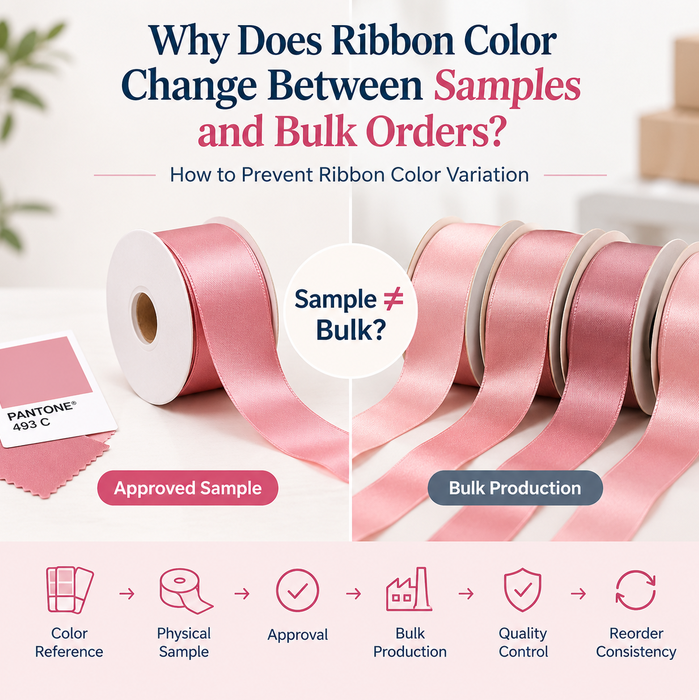
Different Dye Lots
The same color formula, if produced using different batches of raw materials, yarns, or dyes, can result in slight color variations. Even when a supplier uses the same color number, the physical color can differ from one production run to the next.
“Same color number” does not automatically mean “same physical color.”
Dye lots matter because textile dyeing is not a perfectly uniform process. Factors such as the quality of dye materials, dyeing methods, and even the condition of the dyeing machine can affect the final shade. This is why professional buyers always ask about dye-lot control and request dye-lot tolerance information from their suppliers.
The Ribbon Material Affects Color
This is one of the most important points for buyers to understand. The same color can look completely different depending on the ribbon substrate it is applied to.
| Ribbon Type | How Material Affects Color Appearance |
|---|---|
| Satin Ribbon | Smooth, glossy surface reflects light specularly (like a mirror), which can make colors appear lighter or shift hue depending on the viewing angle. |
| Grosgrain Ribbon | Ribbed texture diffuses light, offering a flatter, more consistent color reading; matte and dull appearance with a ribbed texture. |
| Organza Ribbon | Sheer and translucent—background color can significantly affect how the color is perceived. |
| Velvet Ribbon | Pile direction and light reflection affect color depth; the soft, plush texture creates a different visual effect than smooth surfaces. |
The same Pantone reference applied to polyester satin, organza, and velvet can produce noticeably different visual results. Surface structure, gloss, transparency, and texture all influence how the human eye perceives color.
Lighting Can Make the Same Ribbon Look Different
A ribbon can look completely different under:
- Natural daylight
- Warm indoor lighting
- Cool white lighting
- Retail/store lighting
This phenomenon is known as metamerism—when colors match under one light source but appear different under another. For example, a color that looks perfect in an office under fluorescent lighting may look completely different under retail store lighting.
Don’t approve a color only from a phone photo or computer screen. Screens are not calibrated, and lighting conditions during photography can distort the true color.
The Sample May Not Be Made From the Same Production Material
This is a critical question every buyer should ask:
“Is my approved sample made from the same material and production process that will be used for bulk production?”
If a sample is made from stock ribbon while bulk production uses a different substrate, the color, hand feel, and luster can all change. The same dye formula on a different base fabric—different fiber content or construction—will produce different results.
Finishing Can Affect the Final Color
Dyeing is not the end of the color-control process. Post-dyeing finishing treatments can alter the final visual appearance:
- Heat setting – can affect dye fixation and color stability
- Coating – adds a surface layer that changes how light reflects
- Calendaring – pressing the ribbon smooth can intensify or dull color
- Surface finishing – any treatment that changes the ribbon’s surface texture affects color perception
Temperature control during finishing is particularly critical—even a few degrees of variation can cause noticeable color differences.
Reorders Can Also Have Color Variation
A successful first order does not automatically guarantee an identical reorder. Buyers often assume that once a color is established, future orders will match perfectly. But if the supplier does not keep proper records—including the approved sample, color reference, production records, and relevant material information—the reorder may drift in color.
Professional suppliers should maintain:
- Approved physical samples
- Color references and shade cards
- Production batch records
- Material specifications
This allows them to match future orders against a consistent standard rather than relying on memory or color names.
2. How Can Buyers Prevent Ribbon Color Variation?
Here is a practical 6-Step Ribbon Color Control Process for buyers.
Step 1 — Define the Color Clearly
Don’t just say “We need pink.” Provide:
- Pantone reference (e.g., Pantone 19-1663 TCX)
- Physical swatch – an actual piece of the target color
- Previous approved ribbon – if this is a repeat order
- Target color description and acceptable tolerance
The clearer the initial specification, the less room for interpretation.
Step 2 — Request a Physical Sample
Don’t approve ribbon color from a screen image alone. Always request a physical sample made from the actual ribbon substrate that will be used for bulk production. A digital image cannot capture the true color, texture, or luster of the ribbon.
Step 3 — Approve the Sample in Writing
Put everything in writing. A clear approval record should include:
Approved sample: SR-PINK-001
Material: 100% Polyester Satin
Width: 1.5 in
Color reference: Pantone XXXX
Approval date: XXXX
This creates a clear reference point if any disputes arise later.
Step 4 — Confirm the Production Reference
Ask your supplier directly:
“Will the bulk production be matched against the approved physical sample?”
Don’t accept “We will match Pantone” as the final answer. Pantone is a reference, not a guarantee of the final ribbon color itself. The physical sample should be the primary reference for production.
Step 5 — Check Bulk Production
For large or color-critical orders, request:
- Pre-production sample – made before full production begins
- Production sample – taken from the actual production run
- QC photos – with color reference included for comparison
- Color comparison – side-by-side with the approved sample
Professional B2B suppliers typically conduct sample confirmation before bulk production and perform color checks throughout the manufacturing process.
Step 6 — Keep the Approved Sample for Reorders
This is one of the most practical steps. Keep the approved physical ribbon sample for future reorders. When placing a repeat order, don’t just say “Same pink as last time.” Instead:
“Match the approved sample from PO #XXXX.”
This dramatically reduces communication errors and ensures consistency across multiple orders.
3. Can Pantone Guarantee an Exact Ribbon Color?
Not by itself.
Pantone provides a standardized color communication system, but it is not a guarantee of exact color matching on ribbon. The final color is still affected by:
- Ribbon material – satin, grosgrain, organza, and velvet each absorb and reflect color differently
- Surface texture – smooth surfaces reflect light differently than textured ones
- Dyeing process – different methods produce different results
- Finishing – post-dyeing treatments alter appearance
- Lighting – metamerism can make the same ribbon look different under different light sources
Pantone reference is a useful starting point for color communication, but it should always be confirmed with a physical sample on the actual ribbon material. Some suppliers use spectrophotometers like Datacolor systems to match color within precise tolerances (measured in Delta E), but even then, the physical sample remains the ultimate reference.
4. What Should I Ask a Ribbon Supplier About Color Consistency?
Before ordering, ask your supplier these questions:
- Can you provide a physical ribbon sample?
- Can you match a Pantone color?
- Is the sample made from the same material as bulk production?
- How do you control dye-lot variation?
- Will you keep an approved color reference?
- Can you provide a pre-production sample?
- How do you handle color differences in repeat orders?
- Can you provide QC photos before shipment?
These questions help you evaluate whether a supplier has the processes and discipline to deliver consistent color across orders.
5. Ribbon Color Problems by Ribbon Type
Different ribbon types present different color challenges:
| Ribbon Type | What Can Affect Color Appearance |
|---|---|
| Satin Ribbon | Gloss, surface reflection, dye absorption; specular reflection can make colors appear lighter or shift hue |
| Grosgrain Ribbon | Ribbed texture, density, surface structure; diffuses light for flatter color |
| Organza Ribbon | Transparency and background color significantly affect perceived color |
| Velvet Ribbon | Pile direction and light reflection; the nap direction changes how light interacts with the surface |
Understanding these differences helps buyers set realistic expectations and choose the right material for their application.
6. How Seek Ribbon Helps Buyers Maintain Color Consistency
At Seek Ribbon, we understand that color consistency is one of the biggest concerns for B2B ribbon buyers. Here’s how we help:
196+ Stock Colors – Buyers can choose from a wide range of standard colors instead of developing a new custom color for every project. This reduces lead times and minimizes color risk.
Multiple Ribbon Materials – We offer Grosgrain, Satin, Organza, and Velvet ribbons, so buyers can select the right substrate for their application while understanding how each material affects color appearance.
Physical Sample Approval – We recommend approving the physical ribbon sample before bulk production for color-critical orders. This ensures both parties agree on the exact color, texture, and finish before mass production begins.
Repeat Orders – For repeat orders, buyers can reference the previously approved sample instead of relying only on a color name. This dramatically reduces communication errors and ensures consistency across multiple orders.
7. FAQ
Color differences can occur due to different dye lots, differences in ribbon material, lighting conditions (metamerism), finishing treatments, or because the sample was not made from the same production materials as the bulk order.
Not by itself. Pantone provides a useful color reference, but the final color is still affected by ribbon material, surface texture, dyeing process, finishing, and lighting. Always confirm with a physical sample.
Yes, significantly. The same color can look different on satin (glossy, reflective), grosgrain (textured, matte), organza (sheer, transparent), and velvet (plush, directional pile).
This is called metamerism. Ribbon colors that match under one light source can appear different under another—for example, natural daylight vs. warm indoor lighting vs. retail store lighting.
Yes. Even with the same color formula, different dye lots, raw material batches, or production conditions can result in color variation. This is why professional suppliers maintain approved samples and production records.
Keep the approved physical ribbon sample from your first order. When placing a reorder, reference that specific sample (e.g., “Match the approved sample from PO #XXXX”) rather than relying on a color name alone.